« Il faut faire attention aux priorités d’une partie de l’UE par rapport à l’autre »
En visite officielle à Paris, le vice-Premier ministre tchèque chargé des Affaires européennes, Alexandr Vondra, a fait le point, dans un entretien accordé à EURACTIV.fr, sur le programme de la futur Présidence tchèque de l’UE. Il a également expliqué les positions de son pays sur paquet climat ou l’Union méditerranéenne.
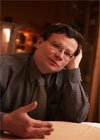
En visite officielle à Paris, le vice-Premier ministre tchèque chargé des Affaires européennes, Alexandr Vondra, a fait le point, dans un entretien accordé à EURACTIV.fr, sur le programme de la futur Présidence tchèque de l’UE. Il a également expliqué les positions de son pays sur paquet climat ou l’Union méditerranéenne.
Pour lire une synthèse de l’entretien en français, cliquer ici
“Europe against barriers” has been presented as the slogan of the future Czech EU presidency in 2009. What does that mean exactly? What are your other priorities?
I would rather say “Europe without barriers”, not against. For us, but also for all central and eastern European countries, 2009 is a special year, because we will commemorate the 20th anniversary of the fall of the Iron Curtain. This historical event made the EU enlargement possible. So I think this is the first reason for having chosen this priority.
Then, despite all this institutional reform, the EU is the most important area where you can find those four types of freedom : movement, people, goods, services. And we would like to see them fully enforced. We’ll take the EU presidency in spring 2009, so the Lisbon agenda and Europe’s competitiveness will be also very important.
2009 is an important milestone for the liberalization of the labour market. At this time, some western countries, which set up transition period, will decide whether to fully open their market. If it should not be a key problem for France, Germany has to make a decision.
But if you take it pragmatically, for example in my country, unemployment has reached a hit and is at about 5%. Opening the labour market has therefore mostly a symbolic meaning.
My recommendation would be to move ahead. I can hardly imagine that for the 20th anniversary of the fall of the Iron Curtain, there would be still barriers on the EU labour market.
French president Nicolas Sarkozy said that the French EU presidency would be under the sign of “protective Europe”. Isn’t that a bit paradoxical considering your priorities?
Well, the barriers I was talking about are internal ones. You now talk about external borders. Certainly we are a pro-enlargement country, so we want to keep the doors open for the others. At the same time, we understand that immigration or asylum policy is important for your country and we noticed that France is eager to make a common immigration policy one of its priorities for the Union. And I think that the French proposal could be in line with our interest to keep the EU doors opened. Indeed, we can enlarge the Union only if there is enough support among the Europeans themselves. Maybe those new proposals can help to correct public opinion regarding the outside world.
Slovenia doesn’t seem to fully agree with the French government’s communication on its future EU presidency. Do you share this irritation?
Well your president declared that he wants to bring France back on the European stage. And it is true that we need France to be among the leaders, so I don’t think that your communication is too abrasive. We’ll see when we will take our presidency next Spring, but I believe that French politicians would also respect the interests of other Member States.
How would you qualify your cooperation with France in the preparation of the Presidency trio (France, Czech Republic and Sweden)?
We have very good relations with French political leaders like for instance Jean-Pierre Jouyet. Of course we have different opinions, for example on common agricultural policy. We are more liberal, we are in favor of spending more money for science and new technologies, rather than to be consumed just by farmers. The European Union is an entity of 27 countries, there are some differences among them, but until now, we have a lot in common.
Some people say that the countries which joined the European Union in 2004 are not ready to share the burden, for example on renewables. Do you agree with this opposition between small and big countries?
On renewables, we certainly have our limits. Our hydro potential, for example, is not the same as in Austria or in Norway.
We are not like big countries, or like Scotland, where it rains everyday. In the middle of Europe, there is not much sun either, and biofuels have a limited potential. In addition, our country has a very dense population. There is a lot of villages and you cannot destroy villages to produce a big field or various crops that can be used for biofuels. So we have very limited potential on renewables.
But if you consider the Kyoto protocol, it is different. Reference for Kyoto is 1990 levels, and we are among the few EU countries, which reduced their greenhouse gas emissions by more than 20% in the past 15 years.
We have a lot of questions about the new system. The new emission trading system has probably to be more effective, but the devil could be in the detail and we need a serious debate on it.
On one hand, you have to contribute to the environment’s protection, and on the other hand, traditional industrial countries want to increase their competitiveness in the world. It is an important theme and I expect a lot of discussion on this.
What is your country’s position on the French Mediterranean union project?
For us, the Mediterranean area is the cradle of our European western culture, but that’s one side of the coin. On the other hand, we recommend to be careful with the priorities of one part of Europe compared to the other one, because with that kind of approach, we could on our side develop the Baltic sea union or the Black sea union. I think we should have a balanced attitude on this issue.