Demokratisierung in der europäischen Nachbarschaft
Die Kapitel dieses Buches, das von der Website des Centre for European Policy Studies (CEPS) heruntergeladen worden ist, sind ursprünglich in Form von Arbeitspapieren auf einer Konferenz am 20. und 21. Juni 2005 zum Thema „American and European Approaches to Democratisation in the European Neighbourhood“ in Brüssel vorgestellt worden. Es befasst sich hauptsächlich mit den aktuellen Entwicklungen an den zwei bedeutendsten Demokratisierungsfrontlinien in der europäischen Nachbarschaft – in den Staaten der ehemaligen Sowjetunion im Osten und arabischen Ländern des Mittelmeerraums im Süden – und der EU-Nachbarschaftspolitik.
Die Kapitel dieses Buches, das von der Website des Centre for European Policy Studies (CEPS) heruntergeladen worden ist, sind ursprünglich in Form von Arbeitspapieren auf einer Konferenz am 20. und 21. Juni 2005 zum Thema „American and European Approaches to Democratisation in the European Neighbourhood“ in Brüssel vorgestellt worden. Es befasst sich hauptsächlich mit den aktuellen Entwicklungen an den zwei bedeutendsten Demokratisierungsfrontlinien in der europäischen Nachbarschaft – in den Staaten der ehemaligen Sowjetunion im Osten und arabischen Ländern des Mittelmeerraums im Süden – und der EU-Nachbarschaftspolitik.
Introduction, by Michael Emerson [excerpt]
In the space of one year, the outlook for democracy in the wider European neighbourhood has been transformed. Until recently there was a pervasive pessimism over whether either the states of the former Soviet Union in Eastern Europe or the Arab/Muslim states in the Mediterranean and Middle East might in the foreseeable future engage in genuine democratic reform. The East European states of the former Soviet Union seemed completely stuck in conditions of phoney democracy, i.e. regimes that had the shape and form of democracy, but where corrupted parties of power made a mockery of democratic norms and values. As for the Arab/Muslim neighbourhood, many states were hardly pretending to be democracies, lacking basic electoral processes, constitutional provisions and institutional structures – arguing often that Islam and democracy were incompatible.
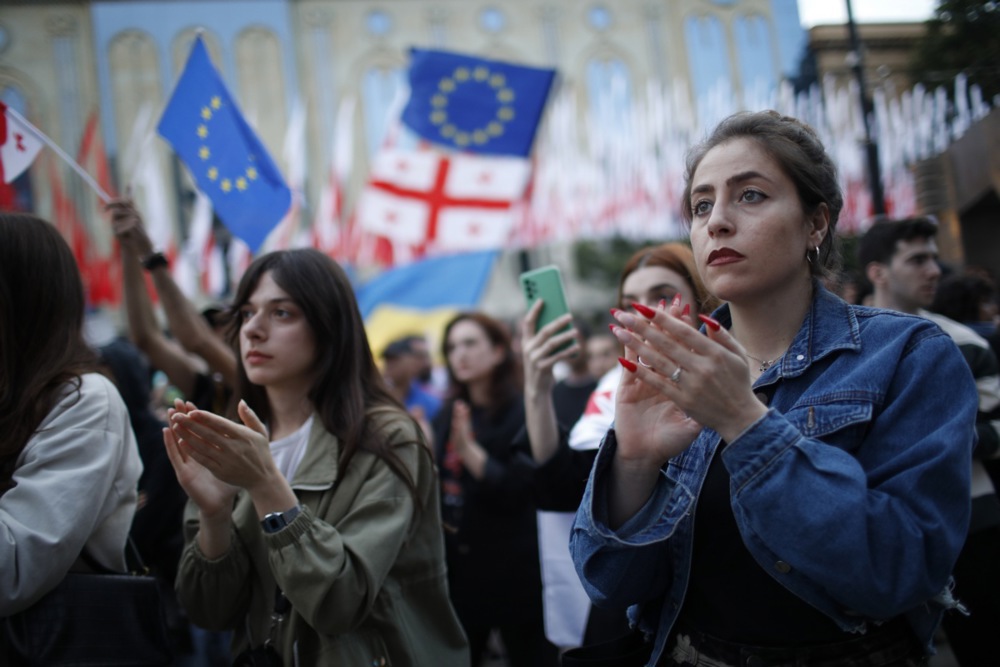
The Rose, Orange and Cedar Revolutions have changed that. These revolutions have surely not yet have translated into smooth new democratic systems, yet still these dramatic developments seem to have witnessed breakthroughs, with newly empowered street democracy throwing out rotten regimes, with a will to do better.
This book has two parts, the first of which analyses the current experiences of the democracy front-line states of the European neighbourhood, both to the east in the states of the former Soviet Union and to the south with the Arab Mediterranean states. The second part analyses what the European Union itself has been doing, and not doing, to promote democratic reform in this wide region. This ordering underlines from the start that democratisation has to be seen first and foremost as a home-grown process. The gravitational forces of influence and incentives emanating from the European Union, pulling these states into democracy, are themselves important themes of this book, but still ones that have to take second place behind the domestic driving forces for political reform.
To read the document in full, visit the Centre for European Policy Studies website.