Die Ukraine sollte nicht Teil des "großen Machtspiels" sein
In ihrem Artikel vertreten Katinka Barysch und Charles Grant die Auffassung, dass sowohl die EU als auch Russland wichtige Lektionen von der Krise in der Ukraine lernen können; wie man strategische Interessen und politische Werte miteinander vereinbart, um dem ukrainischen Volk bei der Verwirklichung ihrer Hoffnungen zu helfen. Der Artikel wurde vom Centre for European Reform veröffentlicht.
In ihrem Artikel vertreten Katinka Barysch
und Charles Grant die Auffassung, dass
sowohl die EU als auch Russland wichtige Lektionen von der Krise in
der Ukraine lernen können; wie man strategische Interessen und
politische Werte miteinander vereinbart, um dem ukrainischen Volk
bei der Verwirklichung ihrer Hoffnungen zu helfen. Der Artikel
wurde vom Centre for European Reform
veröffentlicht.
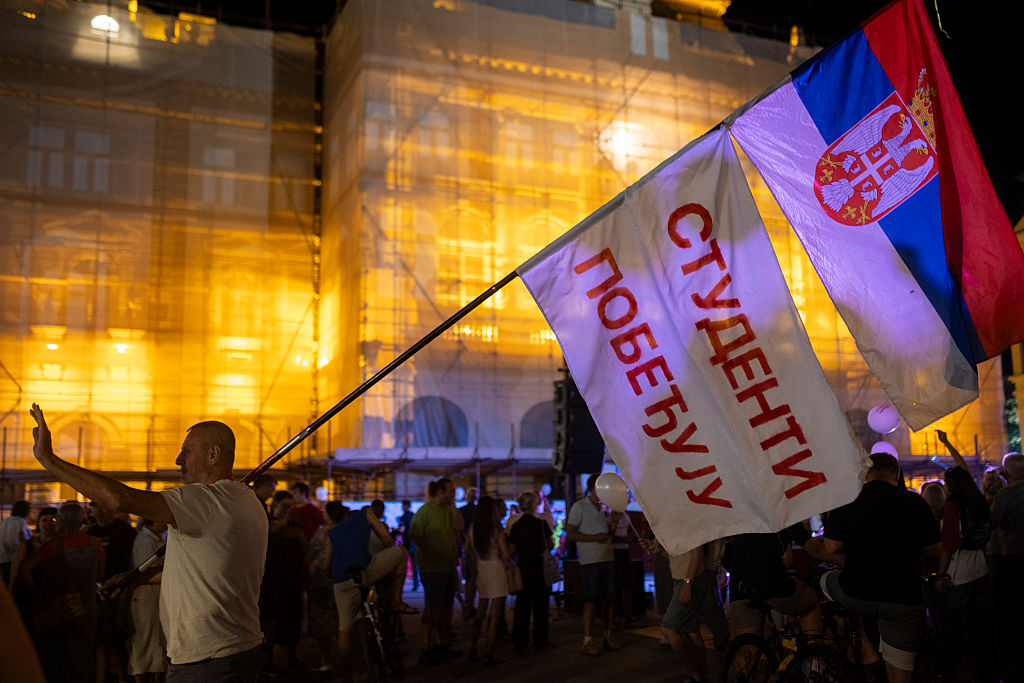
In their reporting of the crisis in Ukraine, the world’s media have
focused on the pro-Viktor Yushchenko demonstrators. But while this
manifestation of “people power” has understandably grabbed the
headlines, another more sinuous tale has unfolded in the
chancelleries and foreign ministries of Moscow, Washington, and
European Union capitals. This is about what the “orange revolution”
means for Russia’s attempt to control its “near-abroad”, for the
EU’s relationship with Russia, and the future orientation of
Ukraine.
The apparent failure of Moscow’s man, Viktor Yanukovych, to win
the presidency, has reinforced an already strong tendency in the
Kremlin to revert to cold war attitudes. Many Russians see Ukraine
as the target of a tug-of-war between themselves and the west. They
assume that the EU, like the Kremlin, has been working to install
“its” man in Kiev. Kremlin propaganda has fed such assumptions. So
have some western commentators, at both ends of the political
spectrum.
Some right-wing Republicans, notably those active in Washington
think-tanks, take the line that anything that weakens Russia – such
as the installation of a pro-western government in Kiev – is
inherently good. However, these Republicans are neither the
majority of Americans nor those in charge of policy on Russia.
Meanwhile, the support of some American NGOs for the Ukrainian
opposition has convinced a number of left-wing European
commentators – such as the Guardian’s Jonathan Steele – that
“America” is playing geopolitical games and that Russia has
therefore every right to thwart Yushchenko.
Russia and the European Union: a new
tension
That is also how it looks in Russia, and not only among members
of the security establishment. While Russian paranoia about
American intentions is longstanding, paranoia towards the EU is
something new. In the space of two years the EU-Russia relationship
has deteriorated from cordiality to antagonism, to the point where
senior Russians now view the EU as a hostile power that is
expanding into Russia’s sphere of influence. The EU’s complaints
about human rights in Russia, and notably in Chechnya, changed the
Russian mood, while the three recent mediation missions to Kiev,
led by EU foreign policy chief Javier Solana, have provoked more
wrath.
However, many Russians misread the European Union’s intentions.
Most of the latter’s governments do not want to pluck Ukraine from
Russia’s sphere of influence. They know that some leading figures
in the Yushchenko camp have dodgy pasts. However, like many
Ukrainians, they see the crisis as a struggle between a corrupt,
semi-authoritarian regime and a movement that is committed to
democratic reform and economic opening.
To read the article in full, visit the Centre for European Reform website.