La Turquie mise sur la « douceur » pour s'imposer dans le monde arabe
Dans le contexte de la guerre civile en Libye et des révolutions qui se développent dans la région arabe, la Turquie intensifie ses efforts pour se placer comme modèle et négociateur diplomatique. EURACTIV Turquie a contribué à cet article.
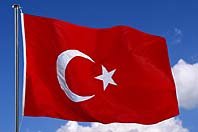
Dans le contexte de la guerre civile en Libye et des révolutions qui se développent dans la région arabe, la Turquie intensifie ses efforts pour se placer comme modèle et négociateur diplomatique. EURACTIV Turquie a contribué à cet article.
Turkey has made an unprecedented diplomatic effort regarding the Libya conflict (see 'Background'), leading many to question Ankara's motivations.
In European quarters, Turkey's diplomatic engagement in the region is officially welcome, particularly in the UK, which favours Turkey's EU accession.
But others suspect that by becoming more active in hotbeds of tension in the Arab world, Ankara is in fact raising the stakes vis-à-vis its Western allies and counterparts, and sometimes undermining their efforts.
In the beginning of the Libya stand-off, Turkish Prime Minister Recep Tayyip Erdo?an took aim at France in particular, riding on Turkish hostility towards military intervention to resolve the crisis. But the situation changed once the operation came under NATO's umbrella.
Turkey is also suspected of using the crisis to pursuing its own agenda. One example of this is the proposed missile defence shield in Central and Eastern Europe, which Ankara would like to fall under the command of NATO rather than the US.
Officially, Turkey says that the missile shield and its involvement in efforts to resolve the Libya crisis are separate issues.
Turkey, a NATO member since 1952, is apparently attempting to cope with the sensitivities of public opinion in the Middle East. Emine Kart, an editorialist at the Zaman daily, says Turkey wants to make sure that its role as a NATO member is not confused with its role in the wider Arab region.
"Because we don't want to be considered part of the Western bloc, when the case is a multilateral one, we are implementing the concept of 'regional ownership' on the ground," Emine Kart writes. "While doing this, on the other hand, we are launching our own humanitarian assistance initiatives, such as the latest ones in Libya, and carrying them out as national operations."
Mehmet Ali Birand, a political commentator at daily Hürriyet, says the Libyan crisis provides the opportunity for both Turkey and its major partners to learn important lessons.
"Turkey understood that it does not have the power to act without the European Union or the United States; and Europe understood that without Turkey it is unable to conduct effective politics in some regions," Birand writes.
According to Birand, Turkey's most powerful attribute in the region is actually its "soft power". Similarly to European soft power coupled with US 'hard power', Turkey's role is so valuable that it cannot be ignored, he argues.
Kerem Caliskan, editor-in-chief of EURACTIV Turkey, writes that the bottom line is that Turkey's policy towards the Middle East favours change and reform. However, Turkey must be careful that this process of change does not lead to civil war in these countries, he adds.
"Some sources name Turkey as a role model for Middle Eastern countries which are experiencing the process of change. However, it should be noted that today's Turkey is the result of a process of change that lasted for a century," Caliskan cautions.