Slowakischer Premierminister verteidigt “sozialdemokratische” Regierung [DE]
Der neue slowakische Premierminister Robert Fico erklärte bei seinem Besuch in Brüssel, das Ziel seiner Regierung sei es, ein Gleichgewicht zwischen weiteren wirtschaftlichen Reformen und einem effizienten Wohlfahrtsstaat zu schaffen.
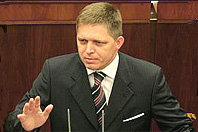
Der neue slowakische Premierminister Robert Fico erklärte bei seinem Besuch in Brüssel, das Ziel seiner Regierung sei es, ein Gleichgewicht zwischen weiteren wirtschaftlichen Reformen und einem effizienten Wohlfahrtsstaat zu schaffen.
In his talks with the Commission, Fico confirmed that his government remains firmly committed to the EU’s agenda for growth and jobs (Lisbon agenda) and the obligations of the convergence criteria. He also gave reassurance that his government will tackle „ethnic intolerance“. Recent ethnic unrest against Slovakia’s Hungarian minority had raised concern in Brussels.
Speaking to an audience of journalists and lobbyists at the EPC, the Slovak leader insisted that his team is a “social-democratic government”. He promised “clear continuity” in foreign affairs (NATO as well as the EU) and stated that his country supports further enlargement of the EU with Romania and Bulgaria.
Fico also restated his commitment to the timetable for entry into the Schengen zone and the adoption of the euro in 2009.
He emphasised that his government will respect the agreement with the EU to decommission the two Bohunice nuclear power plants, although he warned his country will become more dependent on electricity imports in the future.
The new Slovak premier said he wants to steer his country towards a more „economically efficient welfare state“. Fico accused the previous government of having introduced economic reforms that the majority of Slovak citizens had not benefited from. „Slovakia has the highest poverty rate in Europe and very high unemployment,“ Fico said. „Eight years of right-wing reforms have been a disaster.“
Fico promised to continue reforms and comply with the Maastricht criteria but “not on the backs of the people”. High economic growth (up to 7% recently, and expected growth of around 5%) and slimming down an inefficient and bureaucratic state apparatus should bring the necessary resources to find the right balance between compliance with Maastricht and building the new welfare state, the prime minister said. He also committed to using EU funds efficiently and fighting internal corruption.